Home Security Planning
New Home Lock Change Checklist for Cypress Homeowners
Moving into a home often means more keys have existed than you realize. Here is a practical way to organize your first lock and key decisions.
License Number: B31188601
Residential lock repair in Cypress addresses sticking keys, loose hardware, jammed deadbolts, and latches that will not catch.
Direct Key & Lock helps homeowners in Cypress, TX find the cause and choose a suitable repair. Our residential locksmith service checks the lock and door together so the work addresses the problem, not just the symptom.
A front door should not need a shoulder shove and a lucky twist before it locks. If yours does, the trouble may involve the lock, the door, or both. Catching that trouble early can help prevent a broken key or a door that will not secure.
Call (346) 412-0490 or visit our homepage to discuss your home’s lock problem and schedule service.
Residential lock repair restores the function of existing home locks when their condition allows a sound repair. The work may involve the key cylinder, latch, bolt, mounting screws, strike plate, or connections inside the hardware.
A lock has several pieces that must work together. The key must turn the cylinder, the mechanism must move the latch or bolt, and the door must line up with the frame. Trouble at any point can make the entire lock feel broken.
We assess the affected hardware before recommending work. Depending on its condition, the next step may involve adjustment, cleaning, correcting loose hardware, or replacing a worn component.
Repair does not always require replacing the complete lock. Still, cracked hardware, severe corrosion, or missing compatible components may make replacement the more practical choice. We explain that distinction before you decide how to proceed.
A lock needs attention when it becomes harder to operate, stops holding the door closed, or behaves differently from normal. You do not need to wait until the key breaks or the deadbolt jams.
Does the key work only after several tries? Do you have to lift the handle to lock the door? These clues can help point to the source.
Grinding, scraping, or fresh metal marks also deserve attention. A lock may still work while wear is building inside it.
Lock trouble often comes from worn components, door movement, loose mounting hardware, or a damaged key. The symptom alone does not always identify the cause.
A sticking key may point to wear inside the cylinder, but a bent key can cause similar trouble. If a spare key works smoothly and the usual key does not, mention that difference when you call. Do not keep using a visibly bent or cracked key.
Door alignment is another common factor. Hinges can loosen, doors can sag, and weather seals can press against the slab. The deadbolt then rubs against the strike opening instead of moving cleanly into it.
Moisture, dust, and unsuitable sprays can also affect operation. Some household oils collect dirt rather than solve the problem. Adding more product without checking the hardware can turn a small issue into a sticky mess.
A deadbolt that works with the door open but binds when closed often has an alignment problem. Replacing the cylinder alone may leave that problem unchanged.
If it is safe to do so, compare how the thumbturn feels with the door open and closed. Keep your fingers clear of the bolt and do not force it. Share what you notice with us rather than making changes to the frame yourself.
We check how the bolt lines up with the strike plate and whether it can extend fully. Hinge condition, door fit, and loose screws may also affect that movement.
A deadbolt should not depend on lifting the door or pulling hard on the handle. That extra pressure can strain the key and internal mechanism. The goal is normal operation with the door in its resting position.
Help with home latches and handles addresses doors that will not stay closed, handles that droop, and hardware that feels loose. These problems can affect exterior doors and interior privacy doors.
A latch may fail to catch because its spring is worn or its position does not match the strike opening. A handle can also move without fully drawing back the latch. That can leave you pushing against a door that still has its latch engaged.
Loose trim does not always mean the whole lock has failed. Mounting hardware may need correction, but tightening every screw as hard as possible is not the answer. Excess pressure can cause binding or damage certain lock assemblies.
For a bathroom or bedroom door, tell us if someone has been stuck inside or cannot operate the handle easily. Problems that interfere with leaving a room deserve prompt attention, even if that door is not an exterior entrance.
A broken key or jammed cylinder should be handled without forcing tools into the keyway. Improvised removal attempts can push the fragment farther inside or damage the cylinder.
Stop turning the remaining piece. Keep any fragments you have and let us know whether the door is open, closed, locked, or unlocked. Those details help us understand the situation before the visit.
Do not use glue to pull out a fragment. Glue can spread into the mechanism and make repair more difficult. A lock cylinder is a poor place for a craft experiment.
The cause matters after the fragment is removed. A worn key, stiff cylinder, or binding deadbolt can lead to another break if left unaddressed. We assess the related trouble rather than treating the broken key as an isolated event.
Our repair process begins with checking the symptom and tracing it to the lock, door, or frame. For residential lock repair in Cypress, that full check helps us avoid treating door movement as a cylinder failure.
You can help by showing us the exact motion that causes trouble. An occasional sticking point may not appear during the first test, so your description matters.
Repair, rekeying, and replacement solve different problems with home locks. Choosing the right approach depends on both the hardware condition and who should have access.
Repair addresses mechanical trouble. Rekeying changes the internal key arrangement so a different key operates the lock. Rekeying alone does not correct a dragging door, worn latch, or cracked lock housing.
Replacement may be appropriate when the lock is badly damaged, unsuitable for the door, or no longer has compatible repair components. Damage from forced entry can also extend beyond the lock into the door or frame.
Have you recently moved into a home in Cypress, Texas? Tell us if you also have concerns about unknown copies of the current keys. Access control and mechanical condition are separate issues, and both should be discussed before deciding on the work.
The time needed depends on the cause, the condition of the hardware, and access to suitable components. A loose mounting connection is different from a damaged cylinder inside an older handle set.
Some problems become clear during the first inspection. Others need closer checking because several issues overlap. A sagging door may have worn the latch while also placing pressure on the deadbolt.
We avoid promising a completion time before understanding the condition. If the inspection reveals a broader door problem, we explain how it affects the lock repair and the next steps.
Stop forcing a lock when the key bends, the mechanism grinds, or the door cannot be secured through normal operation. Repeated pressure can turn a repairable problem into broken hardware.
If an exterior door will not lock, do not leave it unattended while assuming the latch will hold. If practical, have someone remain at home while you arrange help. Avoid improvised fixes that prevent people from leaving safely.
If a person is trapped or there is an immediate threat to safety, contact emergency services. Lock repair scheduling is not a substitute for urgent help.
For less urgent trouble, keep tools out of the cylinder and avoid drilling or filing the strike opening. Removing material before checking door alignment can create another problem. Tell us what you have already tried so we can inspect those areas too.
You can prepare for your home locksmith visit by noting the symptoms, gathering the working keys, and clearing space around the affected door. A few simple details can make the inspection more useful.
Avoid taking the lock apart before we arrive. Small springs and connecting pieces are easy to misplace, and reassembly can hide the original symptom.
If you have a lock brand or model visible on the hardware, mention it when calling. You do not need to remove the lock to find that information.
Heat, humidity, and moisture changes can affect door fit in Cypress, TX. Wood doors may swell or shrink, and changes in fit can place pressure on otherwise usable lock hardware.
An exposed front entrance may behave differently from a sheltered side door. Have you noticed the lock sticking after rain or during the hottest part of the day? That pattern is useful, even if the lock works normally during the visit.
Fresh weather stripping can also change how firmly a door must close. If the lock problem began after painting, hinge work, or seal replacement, tell us. Recent changes often provide helpful clues.
We consider these conditions during the home lock inspection without assuming weather is the cause. A worn cylinder still needs attention even if humidity makes its symptoms more noticeable.
Gentle operation and occasional visual checks help you spot new trouble after a repair. A key should turn without being used as a handle to pull the door shut.
Use the knob or handle to position the door before operating the deadbolt. Keep keys clean, and set aside any key that looks bent or develops a crack. A damaged key can wear or break inside a working cylinder.
Avoid spraying household cleaners directly into the keyway. Wipe exterior surfaces with an appropriate cloth and keep excess moisture away from the mechanism.
Direct Key & Lock focuses on finding the cause, explaining the options, and checking the door after the work. You should understand what was wrong and what was done to address it.
We listen to details that can be easy to dismiss, including a lock that sticks only at night or a handle that needs lifting. Those details help connect the symptom to the hardware and door condition.
If the lock is repairable, we discuss the suitable repair work. If replacement or separate door work is needed, we explain why. Our approach keeps the decision tied to the condition of your home’s hardware.
Call Direct Key & Lock to discuss residential lock repair in Cypress and arrange an inspection of your affected door. Tell us whether the door currently locks, whether you can operate it from inside, and what happens when you use the key.
You do not need to know the name of the broken component. A clear description like “the deadbolt works only when I pull the door” gives us a useful place to begin.
Call (346) 412-0490 or contact us to schedule service in Cypress, Texas. Let us help you address the sticking, looseness, or binding before it disrupts your next trip through the door.
Residential lock repair addresses problems with locks on home doors. Direct Key & Lock provides this service.
A lock may need attention if the key is difficult to turn, the mechanism feels loose, or the door does not lock properly.
Some lock issues may be repairable, while others may require replacement, depending on the lock’s condition.
Sticking can be related to wear, debris, or alignment issues. The cause may need to be assessed before deciding on a repair.
Avoid forcing the lock or pushing the broken piece farther inside. Contact a locksmith for assistance.
A loose handle may involve the hardware or the lock itself. An assessment can help identify what needs attention.
Repair addresses how a lock functions, while rekeying changes which key operates it.
Yes. If a door and its frame are not aligned, the lock may be difficult to engage even when the mechanism is functioning.
Avoid forcing or taking apart a lock if you are unsure of the cause. Professional assistance may help prevent further damage.
Describe the problem, which door is affected, and whether the lock still operates. Mention any recent changes in how it feels or functions.
Moving into a home often means more keys have existed than you realize. Here is a practical way to organize your first lock and key decisions.
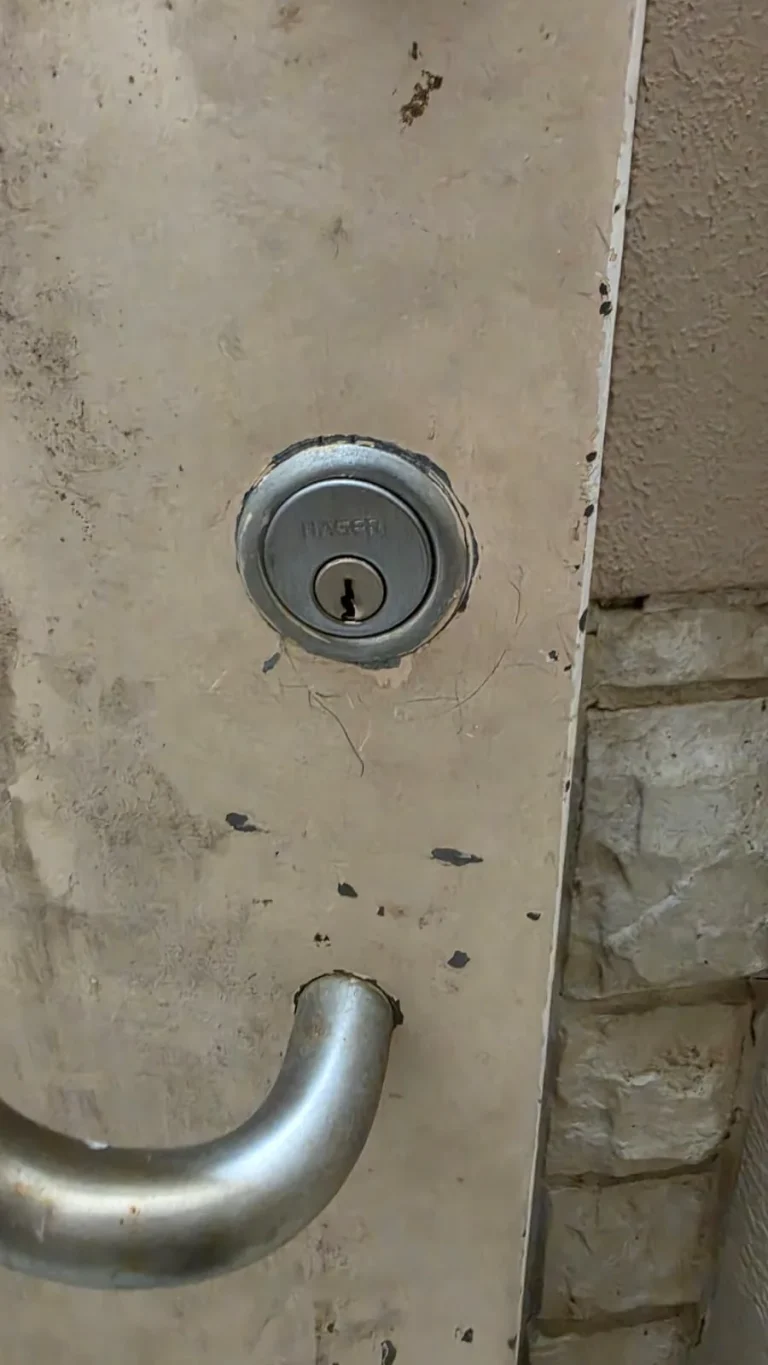
A failing lock does not always need to be replaced. Learn when a door or lock repair may solve the problem, when replacement fits better, and when rekeying protects your home.