
License Number: B31188601
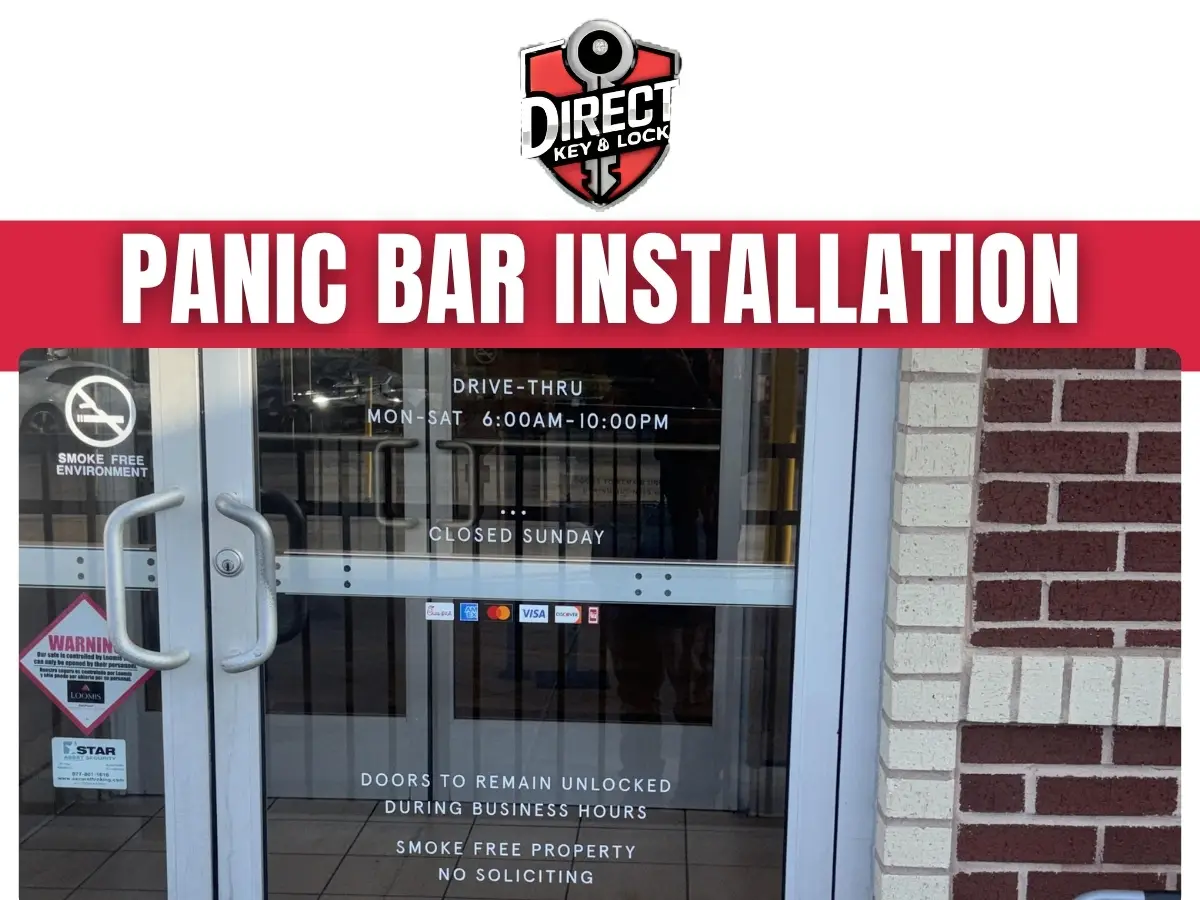
Push-to-exit hardware for your business.
Panic Bar Installation in Cypress adds push-to-exit hardware that helps people open a commercial door from inside. Direct Key & Lock checks your door, selects compatible hardware, and installs it for dependable operation. We help Cypress, TX businesses address exit access while keeping outside entry needs in view.
A panic bar releases a door’s latch when someone presses the bar or touchpad from inside. It gives people a simple way to leave without turning a knob or searching for a key.
You may also hear this hardware called an exit device, push bar, or crash bar. These terms often describe similar products, but the correct hardware depends on the opening and its intended use.
A working exit device supports both routine traffic and urgent exits. Customers, employees, and visitors should not need a quick lesson before opening the door.
Does your current exit require a pull, twist, or hard shove? That is worth checking before replacing hardware. The problem could involve the latch, hinges, frame, closer, or several components working against each other.
Panic Bar Installation involves checking the complete door opening, fitting compatible hardware, and testing how everything works together. A new bar cannot correct a dragging door or loose frame by itself.
At Direct Key & Lock, we consider how the door opens, closes, and latches. We also review how people enter from outside and whether existing locks or access controls affect the work.
The goal is a door that works as a complete assembly. The push bar should not have to fight the rest of the opening.
The door’s material, size, construction, and condition guide the hardware selection. Commercial metal doors, wood doors, and narrow-frame storefront doors can require different mounting methods and device styles for commercial hardware installation.
Existing holes also matter. A replacement device may not match the previous hardware’s attachment points, and unused openings may need an appropriate repair or cover.
We check for bent frames, worn hinges, loose fasteners, and damaged mounting areas. These conditions can keep even a properly selected exit device from working correctly.
Before requesting installation, look at the door while it closes. Does it scrape the threshold, catch near the top, or need an extra push to latch? Tell us what you notice, but leave adjustments to someone familiar with the opening.
Exit device selection depends on whether the opening has a single door, paired doors, or a narrow storefront frame. The hardware must fit the door and work with its latch points.
Rim devices use a surface-mounted latch that meets a strike. They are common on suitable single doors and can work on certain paired openings with a compatible center post.
Vertical rod devices connect the push mechanism to latch points near the top and, depending on the model, the bottom. Their alignment matters because a small shift can affect release or closing.
Mortise exit devices use a lock body fitted into the door edge. Narrow-stile devices fit certain storefront doors with limited mounting space.
These choices are not interchangeable across every opening. We review the actual door before recommending a device rather than choosing by appearance alone.
A panic bar can permit exit from inside while exterior trim controls entry from outside. The right setup depends on whether the door serves customers, staff, deliveries, or emergency exit use.
Some openings need an outside pull with keyed access. Others need a lever, restricted exterior operation, or no operating trim on the outside.
Who should be able to enter through this door during business hours? Who needs access after closing? Those answers help prevent a setup that frustrates staff or leaves entry less controlled than intended.
Existing deadbolts, chains, or added slide bolts need careful review. An extra lock may interfere with the exit function even when the panic bar itself works. Do not assume that adding more locks makes an exit door safer.
A fire-rated door assembly needs hardware appropriate for its rating and use. Standard panic hardware and fire exit hardware are not automatically interchangeable when planning exit hardware installation.
Labels on the door or frame can help identify the assembly. Painting over, removing, or ignoring those labels can make hardware selection harder.
Some panic devices have a feature called dogging, which holds the latch retracted during permitted use. Mechanical dogging that holds the latch retracted is not appropriate for fire exit hardware.
For fire-rated openings, we review compatibility before proceeding. Questions about required hardware, occupancy rules, or approval should go to the local authority responsible for the property.
A push bar alone does not establish that an opening meets every applicable requirement. Door condition, closing, latching, and other features still need attention.
A hard-to-press, loose, or unreliable exit device needs prompt inspection. Waiting until the door stops opening creates an avoidable problem for everyone using the space.
A note that says “push hard, then lift” is not a repair plan. Exit hardware should not require choreography.
If an occupied area has an exit that will not open, address the situation immediately with building management. Follow the property’s emergency procedures, and contact emergency services if anyone faces immediate danger.
An inspection helps determine whether the existing device needs adjustment, component repair, or replacement. Age alone does not explain every failure.
Loose mounting screws, a shifted strike, and door sag can create symptoms that resemble a failed mechanism. Replacing the bar without correcting those problems may leave the same trouble in place.
Replacement may make sense when the device has serious damage, missing components, or poor compatibility with the opening. It may also be appropriate when the building’s use or access needs have changed.
For Panic Bar Installation in Cypress, we review both the requested work and the condition behind it. That keeps the recommendation focused on the door you have, not a generic hardware swap.
Our visit moves from inspection to installation and operational testing. We discuss visible concerns before making changes that affect the door or its security.
Please identify any tenant rules or building-management requirements before work begins. That helps prevent interruptions after the door is already being worked on.
Paired doors need an exit hardware arrangement that accounts for both door leaves. The active leaf, secondary leaf, meeting edges, and any center post all affect the installation.
A problem on one side can prevent the other side from closing or latching. Some assemblies also need a specific closing sequence.
We look at how the pair operates during normal traffic and when both leaves are used. A delivery opening that works only when someone holds the second door in place needs closer review.
Tell us whether employees regularly open both doors for carts or large items. That detail helps guide hardware selection and keeps everyday use from becoming a series of workarounds.
An alarmed exit device can sound when the door is used, while compatible access controls can manage entry. These features serve different purposes and need careful coordination.
An alarm does not necessarily keep a door locked. It may simply alert staff that someone used the opening.
Electrified hardware may involve wiring, power supplies, door position switches, or connections to other building systems. The required work depends on the equipment already installed and the planned function.
Tell us about any card reader or keypad, alarm, or electric locking component before the visit. Some projects require coordination with the provider responsible for those systems.
Do not assume delayed-exit hardware is suitable for an ordinary replacement. Specialized exit arrangements require a separate review of their permitted use and operating requirements.
Installation timing depends on the door’s condition, the hardware selected, and the amount of preparation required. A compatible replacement can involve less work than converting a door that never had exit hardware.
We can discuss the likely work after reviewing the opening. Photos help with planning, but some conditions only become clear during an on-site inspection.
Avoid scheduling the work during your busiest entry period when another time is available. Your front door already has enough people to deal with.
A clear work area and accurate door information help us assess the opening without unnecessary delays. You do not need to remove the old hardware before we arrive.
Do customers use this door throughout the day? Tell us before scheduling so we can discuss work access and pedestrian routing.
Keep required exit paths usable during any service activity. Temporary arrangements should follow the property’s safety procedures and any applicable direction from building officials.
Regular observation can reveal loose hardware, poor latching, and changes in door movement before they become larger problems. Staff should know what normal push bar operation feels like.
Do not spray random lubricants into the device or adjust internal components without the manufacturer’s instructions. The wrong product or adjustment can create another problem.
Avoid wedging doors open or altering latch operation without confirming that the opening permits it. Fire doors and other protected openings need special care.
A Cypress retail shop, office, restaurant, or storage area may need a different exit hardware arrangement. The building’s use and actual door conditions should guide the decision.
A storefront may have a narrow aluminum frame and frequent customer traffic. An employee door may need controlled outside access without adding steps to the inside exit.
Delivery doors can take repeated bumps from carts and equipment. Texas heat, moisture, and weather exposure can also affect door movement and hardware condition, especially at exterior openings.
Direct Key & Lock considers those practical details when reviewing a Cypress, TX property. We also ask whether the space has changed use, received new partitions, or developed different traffic patterns.
A door that worked for a previous tenant may not suit the current operation. Bring those changes into the conversation before choosing replacement hardware.
Direct Key & Lock helps businesses plan Panic Bar Installation in Cypress around the door, its users, and the property’s access needs. We review compatibility, explain the work, and test the installed hardware’s operation.
Whether you are replacing a damaged push bar or adding exit hardware to a suitable opening, start with the door details. Tell us how many openings need attention, what the doors are made of, and what is not working now.
Clear information helps us discuss the next step without guessing. Photos of the existing hardware and any visible labels are useful when available.
Call (346) 412-0490 or use our contact page to contact Direct Key & Lock about your Cypress, Texas business. Let us know if the door is difficult to open so we can understand the concern from the start.
A panic bar is a door-opening device that allows people to exit by pushing a horizontal bar.
Direct Key & Lock provides panic bar installation services.
Panic bars are commonly found on exit doors in commercial buildings and public spaces.
Installation may be possible, depending on the door’s condition, construction, and compatibility.
Requirements vary by building use, occupancy, and applicable local codes.
General considerations include the door type, building use, and applicable exit requirements.
Compatibility depends on the panic bar and the existing hardware.
Not necessarily. Whether a replacement is needed depends on the existing door and installation requirements.
Keep the work area accessible and discuss building access and scheduling with the installer.
Periodic maintenance may be needed to address wear or operating issues, following manufacturer guidance.