License Number: B31188601
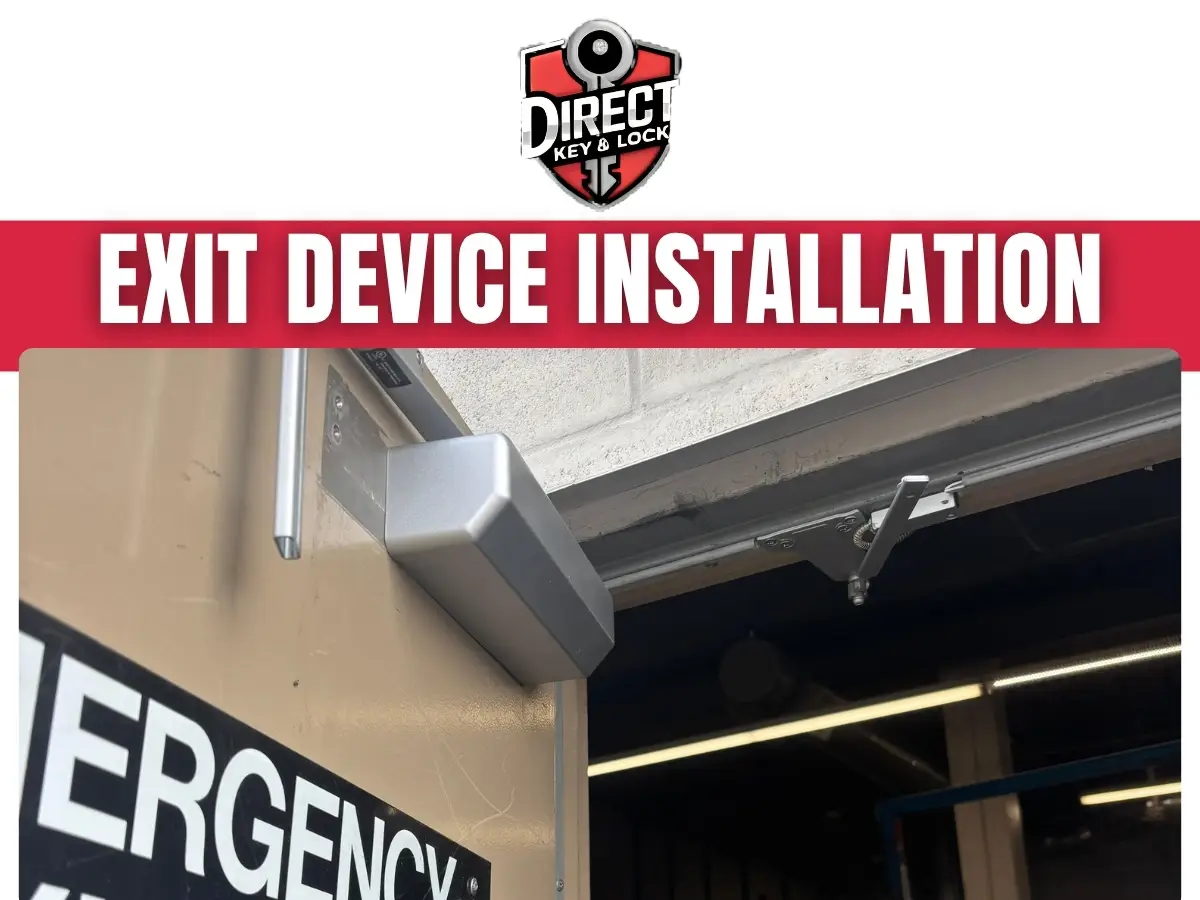
Exit devices help people leave through a closed, latched door.
Exit Device Installation in Cypress adds push-operated exit hardware that lets people open a door from inside without turning a knob. Direct Key & Lock helps businesses in Cypress, TX, select suitable hardware, check door conditions, and install exit devices that support everyday access and emergency egress.
Exit device installation connects the push bar, latch, strike, and related door hardware into a working exit system. A successful installation depends on how those parts work with the door and frame, not just how the bar looks.
At Direct Key & Lock, we look at the opening before recommending equipment. The door material, existing holes, outside access needs, and closing action all affect the choice.
Does your door already have a push bar that sticks or feels loose?
We can assess whether replacement hardware addresses the issue or whether the door needs attention first.
An exit device can allow people to leave from inside while restricting entry from outside. The outside handle, cylinder, or access control arrangement determines who can enter.
This distinction matters for employee entrances, rear doors, and customer exits. A door does not have to stay open or remain accessible from both sides just because it serves as an exit.
Inside operation and outside access need separate checks. A working key cylinder does not prove that the push bar releases correctly.
We also discuss how staff use the entrance throughout the day. Delivery access, opening routines, and closing procedures can change which hardware arrangement makes practical sense.
The right exit device must suit the opening, traffic pattern, and any applicable fire or egress requirements. A bar that fits the door width may still be the wrong product for that opening.
Exit Device Installation in Cypress starts with understanding what the door must do. Is it a public entrance, an employee exit, or part of a paired-door opening?
Each type has different mounting and adjustment needs. We review those differences against the actual opening rather than treating every commercial door hardware installation alike.
A fire-rated door assembly needs compatible hardware that supports its required closing and latching function. Standard panic hardware and fire exit hardware are not interchangeable simply because both have push bars.
Labels on the door, frame, and existing device can help guide the review. Missing labels, previous alterations, or uncertain building records may require input from the property manager or appropriate authority.
Mechanical dogging holds some panic devices in an unlatched position during approved use. Fire exit hardware generally does not permit that function, because positive latching matters to the assembly.
We do not treat a hardware installation as approval of the entire building. Requirements depend on the opening and its use.
A push bar that does not release consistently needs prompt assessment. Staff should not have to learn a special pulling, lifting, or shoulder-pushing routine to operate an exit door.
A new tenant, changed room use, or revised access plan may also prompt a commercial hardware review. The existing device might still move yet no longer suit the planned use.
If an exit cannot operate normally, notify the person responsible for building safety promptly. Do not leave occupants relying on a known blocked or malfunctioning exit.
Door alignment and frame condition can cause exit device trouble even when the device itself is sound. Replacing the hardware without checking the opening can leave the original problem in place.
Loose hinges may let a door sag until its latch rubs the strike. A closer with poor adjustment may slam the door or stop it before the latch engages.
Cypress buildings with exterior exits may also face moisture, dust, and changing weather conditions. Those factors can affect exposed components and door movement.
We check the surrounding hardware so the installation addresses more than the most visible symptom. A new push bar should not inherit an old door problem.
We begin with the door’s condition and intended use, then work through hardware fitting and operational checks. This helps identify obstacles before new mounting holes are made.
If we find damage or incompatible preparation, we discuss it before proceeding with affected work. Surprise holes are not a useful door feature.
Double-door openings need hardware that lets each required exit leaf function correctly. The meeting edges, latches, and closing sequence can make these exit device installations more involved than a single door.
Some paired doors use a center mullion with rim devices. Others use vertical rod hardware, depending on the opening and its requirements.
A fire-rated pair may also involve a coordinator or other specific hardware. Removing a component without understanding its purpose can disrupt the assembly.
We assess the pair as a working unit. Testing just the leaf everyone normally uses can miss trouble with the second door.
Electrified hardware and exit alarms must work with the door’s required exit function. A reader, keypad, or alarm does not replace the mechanical checks needed at the opening.
Do you want staff to enter with credentials while everyone inside can leave through the push bar? That goal needs compatible hardware and a clear plan for power, wiring, and system behavior.
Identify the following details.
An exit alarm alerts people to door use. It is not the same as a lock. Delayed-egress arrangements involve additional requirements and should never be treated as a routine substitute for standard exit hardware.
The time needed depends on the device type, existing preparation, and condition of the opening. A compatible replacement on a sound door is different from fitting new hardware to an altered frame.
We can discuss the likely work sequence after learning about the door. Photos help with planning, but they do not reveal every fitting issue.
For an occupied business, access arrangements matter too. Work should be planned with the responsible manager so people do not lose access to required exits during the job.
Clear access and basic door information help us assess the installation efficiently. You do not need to remove the current device or take the door apart before calling.
Please mention any alarm, reader, door contact, or automatic operator connected to the entrance. Small components can have a large effect on the work plan.
If the door has been altered before, tell us what you know. Even a short account of repeated sticking or past hardware repairs can help focus the inspection.
A completed hardware installation needs testing through ordinary opening, closing, and access routines. Pressing the bar once while the door is already open is not enough.
We also look for rubbing, unusual movement, and contact between components. Problems that appear only during closing still matter.
Before regular use resumes, staff should understand which features they may operate. A push bar should be straightforward, not a puzzle handed to the next shift.
Routine observation helps staff spot loose hardware, closing trouble, or damaged components early. Care should follow the device manufacturer’s instructions rather than a general spray-and-hope approach.
Do not chain the bar, add an improvised lock, or tape a latch back to solve a use problem. Those shortcuts can interfere with exit operation or the opening’s required function.
Avoid drilling, grinding, or changing rod lengths without a proper assessment. If operation changes after installation, record what happens and arrange a hardware review rather than forcing the door.
Direct Key & Lock helps Cypress businesses plan exit hardware around the actual door and daily use. A rear stockroom exit, office entrance, and shared building doorway can call for different equipment and access arrangements.
For businesses in Cypress, Texas, the useful starting point is simple. Identify the opening, describe the problem, and explain who needs entry. We can then discuss the checks needed before selecting and installing hardware.
Ready to discuss Exit Device Installation in Cypress? Have a few door photos and a brief description of your access needs available when you contact us.
Call (346) 412-0490 or visit our homepage to discuss your installation with Direct Key & Lock. Let us know whether you need a new push bar, replacement exit hardware, or help assessing an existing opening.
It involves fitting a door with hardware, such as a push bar, that allows people to exit from inside.
Direct Key & Lock provides exit device installation services.
They are commonly found on exit doors in commercial buildings, schools, and other shared spaces.
Suitability depends on the door, frame, intended use, and applicable requirements.
General considerations include the door type, how the space is used, and relevant building requirements.
Replacement may be an option, depending on the condition and compatibility of the door and hardware.
Some exit devices can be used with compatible access control systems, depending on the setup.
Applicable building, fire safety, and accessibility requirements may affect device selection and installation.
Exit devices generally need routine care and attention to wear, following manufacturer guidance and applicable requirements.
Contact Direct Key & Lock to discuss your door and general installation needs.