License Number: B31188601
Exit Hardware That Opens With a Push
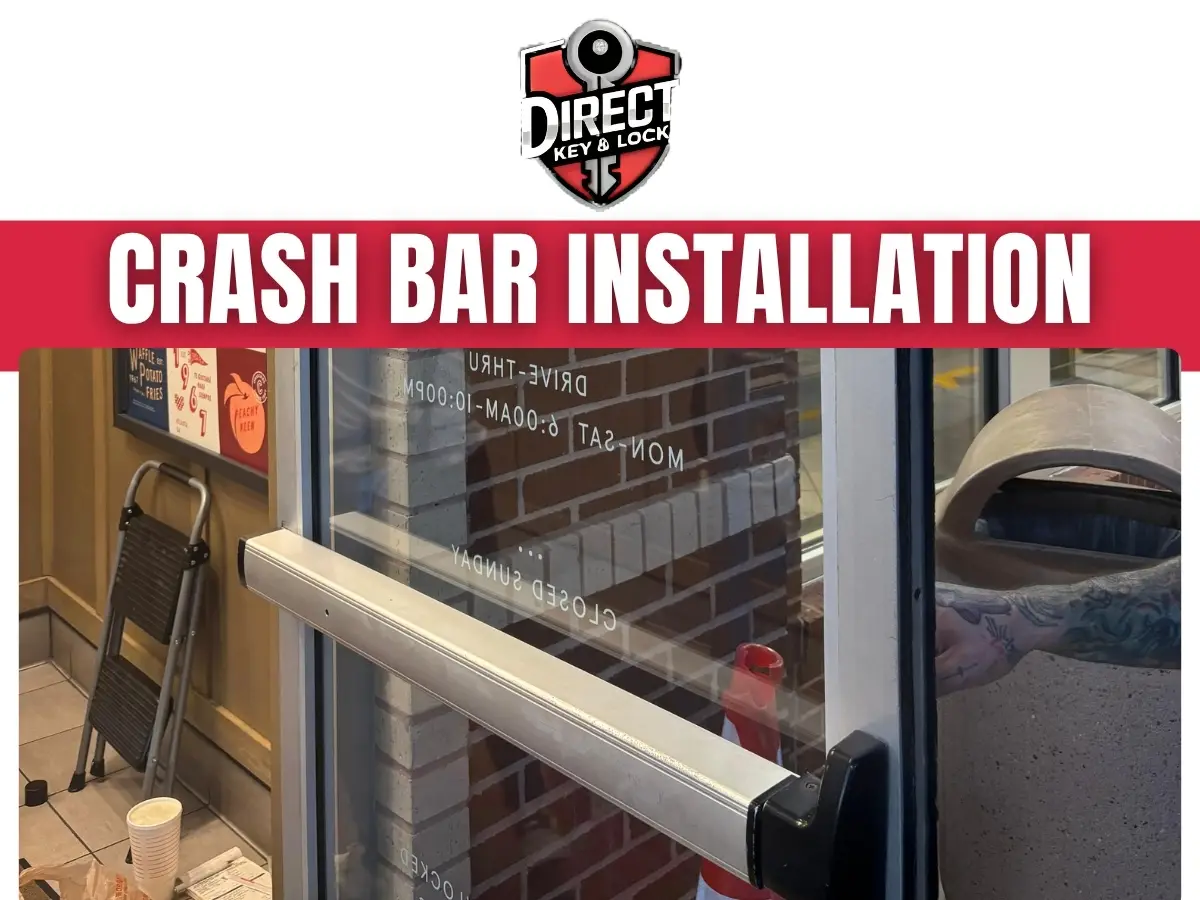
Crash Bar Installation in Cypress involves fitting commercial exit doors with push-operated hardware for easier exit. Direct Key & Lock helps businesses in Cypress, TX select compatible devices, address door fit concerns, and check operation after installation. We focus on practical access, secure closing, and dependable use for your commercial doors.
A crash bar lets someone release a door latch by pressing a horizontal bar or touchpad from inside. You may also hear it called a panic bar, push bar, or exit device.
The device connects to a latch mechanism that releases when pushed. On a properly configured exit door, people can leave without using a key or understanding a separate locking step.
Outside access works differently. Depending on the hardware, an exterior lever, key cylinder, or access control system can manage entry while preserving the required exit function.
Does your current exit need a push, a twist, and a little encouragement? That deserves attention. A commercial exit should not feel like a puzzle during a busy shift or an urgent evacuation.
Installation makes sense when a door needs suitable push-to-exit hardware or its existing device no longer fits the opening’s needs. A business renovation, tenant change, or damaged exit device can prompt a closer look.
Not every sticking door needs a new crash bar. Hinge wear, frame movement, or a poorly adjusted closer can cause similar symptoms. Checking the whole opening helps avoid replacing the wrong component.
The correct exit device depends on the door, frame, use, and applicable requirements. Choosing by appearance alone can leave you with hardware that does not fit or function correctly.
We look at the opening before selecting a device. Door width, thickness, construction, swing, and existing holes all affect the installation.
Photos can help begin the conversation.
Final hardware selection may still require measurements and an on-site inspection.
Exit devices use different latch arrangements to suit different commercial openings. The right choice follows the door configuration, not just a preference for a certain look.
A rim exit device mounts on the inside face of the door. Its latch engages a strike at the frame or, on some paired openings, a compatible mullion.
Vertical rod devices connect the push mechanism to latches at the top and, depending on the configuration, bottom of the door. These arrangements need careful alignment so the rods release and latch correctly.
Mortise exit devices use a lock case fitted into the door edge. They require compatible door preparation and matching components.
Replacing an existing device with a different style may require more than new mounting holes. We consider the door’s condition and approved hardware arrangements before making that change.
A fire-rated opening needs hardware suitable for its listed fire door assembly. A standard panic device is not automatically an acceptable substitute for fire exit hardware.
Labels on the door, frame, and existing device provide useful clues. Building use and applicable requirements also affect which product belongs on the opening.
Fire exit hardware typically does not allow mechanical dogging, which holds the latch retracted. Holding a fire door open also involves separate restrictions and, where permitted, approved equipment.
We do not treat every commercial exit as the same type of opening. If requirements are unclear, confirmation from the local building or fire authority may be needed before work proceeds.
Hardware installation alone cannot establish that an entire building meets every exit requirement. Occupancy, exit routes, door arrangements, and other conditions also matter.
A crash bar works best when the door swings correctly and meets the frame without binding. New hardware cannot correct every problem caused by a bent door or loose hinges.
Common sources of trouble include worn hinge bearings, shifted strikes, damaged mounting points, and closers that pull the door shut too hard. Weather seals can also add resistance if they press too tightly against the opening.
We check how the door behaves through its full swing. That helps separate a latch problem from a door alignment problem.
Look at the edges around your door. Are the gaps uneven, or does the bottom scrape the threshold? Those clues can help explain why a push bar feels stiff, even when its internal mechanism still works.
Our installation process begins with checking the opening and confirming the intended hardware function. For Crash Bar Installation in Cypress, Direct Key & Lock considers both everyday use and the door’s role as an exit.
If we find damage or an incompatible setup, we discuss it before moving ahead with that portion of the work.
A commercial door can restrict outside entry while allowing the required exit operation from inside. The exterior trim and interior exit device must work together in the correct configuration.
Some businesses need a keyed outside lever for employee access. Others need an exit-only door with no normal entry function from outside.
Do not add an interior chain, padlock, or improvised blocking device to solve an entry concern. Those changes can interfere with escape. Discuss the security concern so the door’s entry function can be addressed without obstructing its exit function.
An exit alarm or access control connection requires planning beyond the mechanical crash bar. The device, power supply, controls, and door function need to be compatible.
An alarmed exit device can signal that a door has opened. It does not necessarily prevent the door from opening or replace an outside locking arrangement.
Electrified hardware may require coordination with an access control provider or another qualified trade. Existing wiring should not be assumed suitable simply because it reaches the door.
Tell us about card readers, request-to-exit sensors, door contacts, and alarms before the visit. Clear information helps identify the intended scope and any outside coordination.
Any proposed locking arrangement must preserve the required exit operation. Special locking systems may also need approval from the authority responsible for the building.
Paired doors must be assessed together because each leaf can affect the other’s closing and latching. Replacing hardware on only one side without checking the full opening can leave problems unresolved.
Some pairs use a center mullion with compatible rim devices. Others use vertical rod hardware or another approved arrangement.
We check whether both leaves are active, how each door closes, and whether the opening needs a specific closing sequence. Overlapping edges and existing coordinators can affect that sequence.
Delivery traffic also matters. Do staff regularly use both doors for carts or large shipments? Explain that routine before hardware selection.
The goal is an arrangement that supports the door’s intended operation without improvised fixes. Tape over a latch is not a workable maintenance plan, even if it has become a staff tradition.
Installation time depends on the condition of the opening and how much modification is needed. A compatible replacement on a sound door usually involves fewer steps than changing the hardware style.
We can discuss scheduling after learning about the door and proposed work. Photos, device labels, and a clear description of the problem help make that discussion more useful.
For occupied businesses, plan the work around door traffic. Any temporary exit arrangements should be reviewed with the person responsible for building safety.
A clear work area and access to the door help the installation proceed with fewer interruptions. A little preparation also gives us a better picture of the opening’s daily use.
Do not disable an exit ahead of the appointment. Keep required exit routes usable and coordinate any necessary changes with building management.
If the door serves a tenant space, confirm who handles hardware decisions. A property manager may need to approve changes to common-area doors or connected systems.
Cypress businesses need exit hardware that suits their actual traffic patterns and building conditions. Retail spaces, offices, restaurants, and storage areas can put very different demands on a door.
A busy retail exit may see repeated use throughout the day. A rear service door may face carts, deliveries, and occasional impacts that loosen trim or disturb alignment.
Exterior doors in Cypress, Texas also face heat, humidity, and rain exposure. The opening’s location can affect hardware selection and maintenance needs.
For shared commercial properties, consistent operating procedures matter. Staff should know which doors allow entry, which doors trigger alarms, and which openings must remain clear.
Tell us how your door gets used on a normal day. That information is often more useful than simply asking for a bar that looks like the old one.
A door that will not release reliably needs prompt attention and a building safety response. Do not keep forcing the bar or assume everyone will know a special trick to open it.
Contact a locksmith and notify the person responsible for the property if any of these conditions occur.
Keep people away from loose or sharp components. Do not attempt to drill, cut, or dismantle a fire exit device without understanding the opening’s requirements.
If a required exit is unusable, building management should address occupancy and alternate exit arrangements with the appropriate authority. During an immediate emergency, contact emergency services.
Routine checks help catch loose hardware and closing problems before they disrupt daily use. Follow the device manufacturer’s care instructions and report changes instead of waiting for complete failure.
Avoid spraying random lubricants into the device. Some products can attract dirt or affect internal components.
Do not change closer settings or rod adjustments by trial and error. A small adjustment can change how the whole opening operates.
Direct Key & Lock helps Cypress business owners plan crash bar installation around the door’s condition and intended use. We focus on hardware compatibility, clear explanations, and checks that cover more than the push bar alone.
When you contact us, describe what the door is doing now. Let us know whether this is a new installation, a replacement, or part of a renovation.
Photos of the full door, frame, existing device, and any labels can help us understand the opening. Include both sides when possible, without exposing sensitive access information.
For Crash Bar Installation in Cypress, call (346) 412-0490 or contact us about your commercial door so we can discuss the next step.
A crash bar is a door-mounted device that allows people to open an exit door by pushing a horizontal bar.
Direct Key & Lock provides crash bar installation services.
Crash bars are commonly used on exit doors in commercial buildings, schools, and other shared spaces.
Requirements vary based on the building’s use, occupancy, and applicable local regulations.
Installation may be possible, depending on the door’s condition, construction, and hardware compatibility.
General considerations include the door type, how the entrance is used, and applicable exit requirements.
Installation generally involves selecting compatible hardware, fitting it to the door, and checking its operation.
Some crash bars can work with access control systems, depending on the hardware and building setup.
That depends on its condition, operation, and suitability for the door.
Periodic maintenance can help identify wear or operating issues that may need attention.