
License Number: B31188601
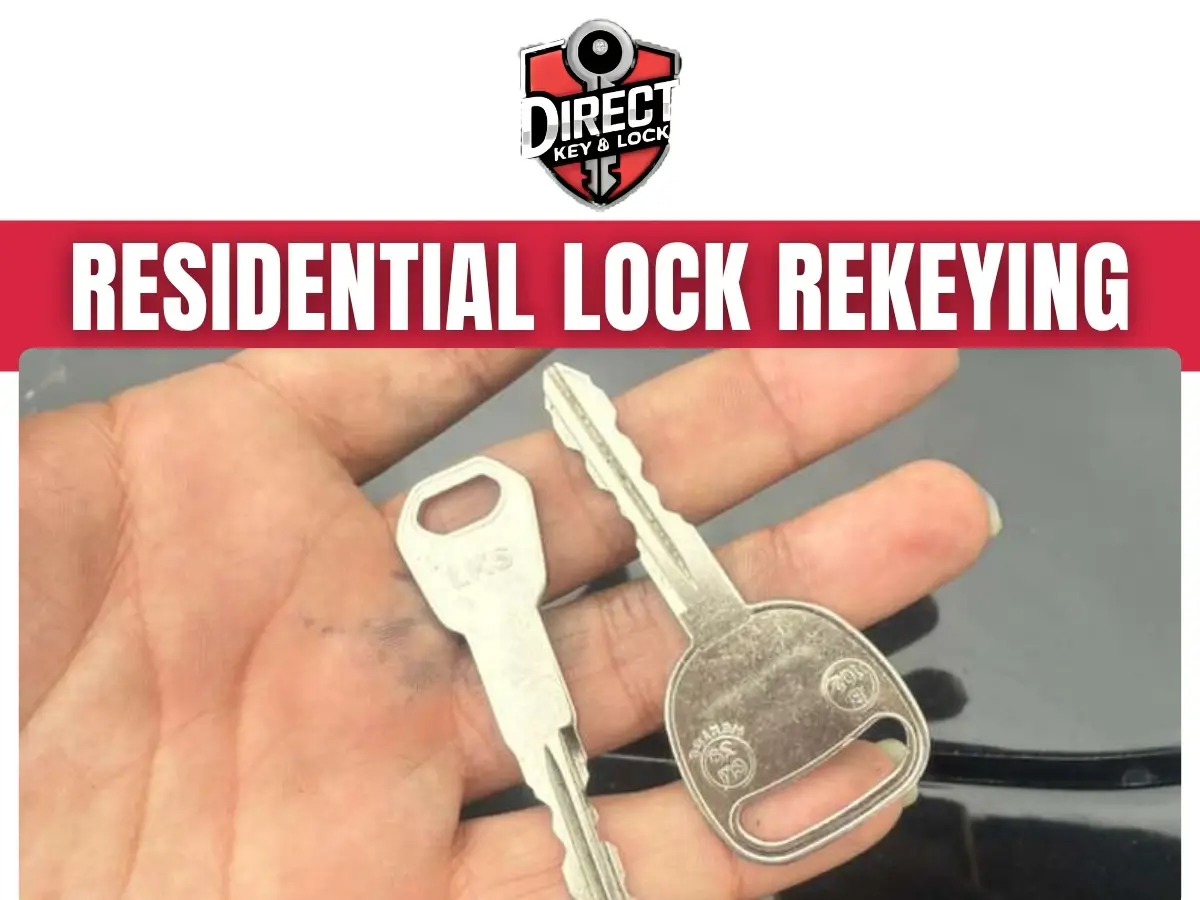
Residential lock rekeying in Cypress changes the working key for compatible home locks without replacing the entire lock.
Direct Key & Lock helps homeowners in Cypress, TX reset access after moves, lost keys, or household changes. We check the hardware, rekey suitable cylinders, and test the new keys.
Rekeying changes the internal pin arrangement inside a compatible lock cylinder so a different key operates it. After a proper rekey, the previous key no longer turns that cylinder. Your existing deadbolt, knob, or handle can usually stay in place if it works properly.
Residential lock rekeying is useful when the hardware is sound but control over key copies is uncertain. It addresses who can open the lock, rather than changing how the door looks. That distinction helps you choose the right service.
A rekey does not strengthen a weak door frame, fix a damaged bolt, or cancel an electronic access code. We consider those concerns separately so changing the key does not leave another access issue unresolved. The goal is a working lock and a clear understanding of who can use it.
Rekeying makes sense when you cannot confidently account for everyone who may have a working key. A missing key is an obvious reason, but an unreturned copy can create the same concern.
Think about how many people have received access over time. Has a neighbor kept a spare? Did a former roommate return every copy, or just the key on their ring?
You do not need proof that someone made an extra copy before deciding to rekey. Uncertainty about access can be enough reason to establish a new set of keys.
A move gives you a practical opportunity to change the keys before settling into daily routines. The keys handed over at closing may work perfectly, but they do not tell you how many copies exist.
Previous owners may have shared keys with relatives, neighbors, or service workers. Even a careful handoff cannot confirm that every old copy was collected. Residential lock rekeying in Cypress helps separate your household’s access from the home’s earlier occupants.
Walk through the property and identify every keyed entrance before arranging service. Include the front door, back door, side entrance, and door between the garage and house. A rarely used door still matters if an old key opens it.
Plan access around your move without leaving yourself locked out. Keep track of which keys belong to which doors until the work is complete and the new keys have been tested.
A lock is a good candidate for rekeying when its cylinder supports the process and its moving parts remain usable. Age alone does not decide the answer. A worn newer lock may need more attention than an older lock that still operates smoothly.
Tell us if you must lift the door, pull hard on the handle, or jiggle the key. Those symptoms may point to door alignment, cylinder wear, or another mechanical problem. New pins cannot correct every source of resistance.
Replacement may be more appropriate if the cylinder is damaged, the housing is loose or broken, or the lock cannot function reliably. We can explain whether the existing hardware is suitable before treating rekeying as the solution.
Do you like your current handles and deadbolts? If they are compatible and in good condition, rekeying can preserve their appearance while changing key access.
Several locks can often be keyed alike when their cylinders use compatible key systems. That can reduce the number of keys needed for everyday entrances. Your key ring does not need to sound like a toolbox.
Compatibility matters more than matching finishes. Two satin-colored deadbolts may use different keyways, while locks with different appearances may accept the same key type. We check the cylinders rather than assuming every lock can share a key.
Separate keys may still make sense for certain spaces. You might want a detached workshop or storage room to have access limited to fewer people. Tell us which doors should work together and which should stay separate.
Before choosing a shared key, consider who needs access to each door. Convenience is helpful, but a single key also gives its holder access to every lock grouped under it.
Our rekeying process begins by confirming the work you authorize and checking the locks included in the request. We also review how you want the new keys to work across your home.
A typical visit follows these steps.
The exact work depends on the lock type and condition.
Let us know about unusual hardware before the visit so we can discuss what needs inspection.
A successful rekey requires more than a key that turns while the door is open. The lock should also operate properly when the door is closed and the bolt meets the strike opening.
Testing with the door open helps isolate cylinder operation from door fit. Testing with it closed helps reveal rubbing, poor alignment, or pressure on the bolt. Both checks matter because a smooth cylinder can still sit in a troublesome doorway.
The new keys should insert, turn, and withdraw without unusual force. The previous key should no longer operate a cylinder that has been rekeyed to exclude it. Each completed lock needs its own check.
Try the new keys yourself before putting them into daily use. If something feels stiff or inconsistent, point it out rather than assuming the lock simply needs time to settle.
The time needed for rekeying depends on cylinder count, hardware type, condition, and access to each lock. A home with three doors may have more than three cylinders if each door has multiple keyed locks.
A working key can help with some lock types, but a missing key does not automatically rule out rekeying. Tell us what you have before the visit. Locked doors or unfamiliar cylinders may require extra steps.
Clear information helps us discuss the likely scope. We avoid treating every home as the same job because the hardware often tells a different story.
You can prepare by identifying the affected doors, gathering existing keys, and clearing access to the locks. A little organization makes it easier to focus on the work and your access needs.
Use this checklist before the visit.
If you rent the home, check with the owner or property manager before changing access. Make sure any required permission and key handoff arrangements are addressed before service begins.
Mechanical rekeying changes physical key access, not every way someone might enter your property. A garage remote, keypad code, or app-based permission can remain active after the house locks receive new keys.
Some electronic locks have a mechanical backup cylinder that may be rekeyable. Changing that cylinder does not automatically remove stored codes or user accounts. The physical key and electronic access settings need separate attention.
Do not assume a reset affects every device connected to an entrance. Follow the manufacturer’s instructions, and ask about unfamiliar hardware before changing settings that could lock you out.
A lost key calls for an access review, while forced-entry damage also calls for a hardware and door inspection. Rekeying can invalidate a missing key, but it cannot restore a split frame or damaged strike plate.
If a key was taken with information identifying your address, explain that when you call about urgent lock concerns. Include which doors the key opens and whether anyone still has authorized access. That helps define the scope without guessing.
If you notice signs of a break-in, avoid entering until it is safe. Contact emergency services if you suspect someone is inside or there is an immediate threat. Lock work comes after personal safety.
Do not force a bent key, drill the cylinder, or take apart unfamiliar hardware. Those attempts can damage usable parts and make access harder. Describe the problem to Direct Key & Lock before trying a fix that may worsen it.
The best key arrangement reflects how people actually enter and use your home. A household that mainly enters through the garage may overlook the front deadbolt until a remote stops working.
For Cypress, Texas homeowners, that garage-to-house door deserves the same access review as the main entrance. Back doors and side entrances also count, even if they are rarely used. List all keyed doors rather than only the busiest doorway.
Household routines can guide how keys are grouped. An adult child, visiting relative, or regular caregiver may need ongoing access, while temporary help may not. Decide who needs a key before handing out the new copies.
Have you been using several nearly identical keys just to get inside? A compatibility check can show whether a simpler setup is possible. Keep separate access where it serves a clear purpose, not just because the old keys happened to work that way.
A fresh key setup stays useful when you control copies and notice lock trouble early. Rekeying establishes a new access point, but everyday habits determine how widely that access spreads.
Use only lock-care products suitable for the hardware and follow the manufacturer’s directions. Household oils can attract dirt or cause trouble in some cylinders. If a key starts binding, do not make extra force part of your routine. Discuss the trouble with a residential locksmith.
Direct Key & Lock helps you choose a rekeying plan based on your locks, your doors, and who needs access. We focus on whether existing hardware is usable, which cylinders are compatible, and how the finished setup should work.
When you contact us, share the number of keyed entrances and your reason for changing access. Mention missing keys, mixed lock brands, electronic locks, or doors that stick. Clear information helps keep the conversation useful from the start.
Residential lock rekeying in Cypress gives you a practical way to reset physical key access without replacing suitable locks. Whether you have just moved or no longer know who holds copies, we can discuss the next step for your home’s lock access.
Call (346) 412-0490 or contact us to arrange residential rekeying in Cypress, TX. Tell us what has changed, and we will help you work through the lock access your home needs.
Rekeying changes a lock’s internal configuration so it works with a different key while keeping the existing lock.
Direct Key & Lock provides residential lock rekeying services.
Common reasons include moving into a home, losing a key, or changing who has access to the property.
Rekeying changes which key operates the existing lock, while replacement involves installing different lock hardware.
Not every lock is suitable for rekeying. The lock’s design and condition help determine the available options.
This may be possible when the locks are compatible. Different lock types may require separate keys.
Rekeying is intended to prevent previous keys from operating the rekeyed lock.
Rekeying may still be possible without the original key, depending on the lock and the circumstances.
Renters should review their lease and consult the property owner or manager before arranging changes to the locks.
Rekeying changes key access but does not repair damaged hardware. A worn or damaged lock may need repair or replacement instead.