License Number: B31188601
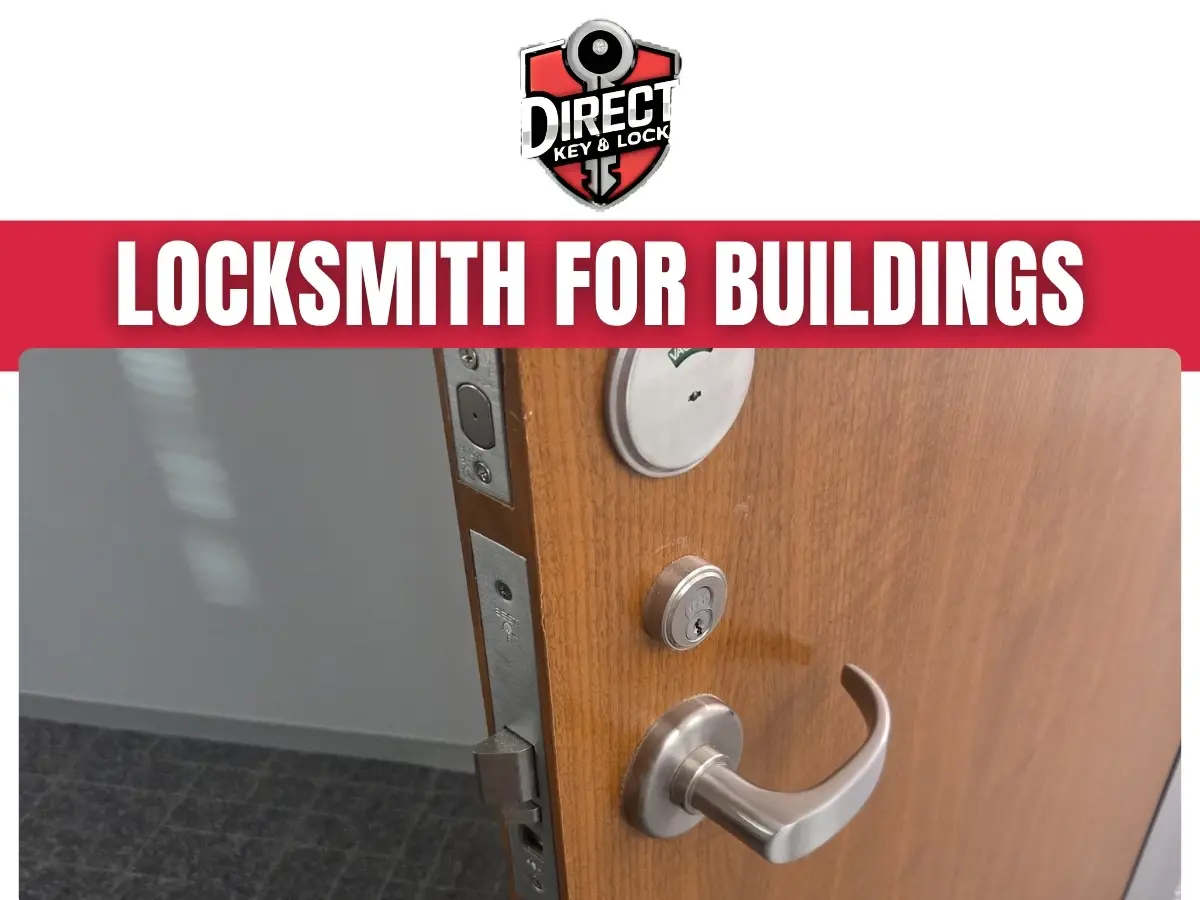
Locksmith for Buildings in Cypress covers lock repairs, rekeying, and access changes for residential and commercial properties. Direct Key & Lock helps building owners and managers in Cypress, TX address troublesome locks, review entry needs, and choose practical next steps for doors used by residents, employees, and visitors.
A building can have several doors, different users, and keys that have changed hands over time. Keeping entry organized takes more than replacing a worn key. The lock, door, frame, and access rules all need to work together.
We help you look at the problem behind the symptom. Whether a key sticks or an employee still has access after leaving, the right solution starts with understanding the door and its use.
A lock needs attention when it becomes difficult to operate, stops securing the door, or no longer gives you control over access. Small changes often show up before a complete failure.
Have you started lifting the handle or pulling hard on the door just to turn the key? That extra effort is worth checking.
A lock should not require a pep talk before every use. Repeated trouble is a reason to investigate.
Building lock problems often come from wear, door movement, loose hardware, or keys that no longer fit correctly. The visible symptom does not always identify the cause.
A stiff deadbolt may be pressing against the strike rather than failing inside. Replacing the cylinder alone would leave that pressure unchanged.
Exterior doors in Cypress, Texas face heat, moisture, and regular use. Changes in door fit can affect how a latch or bolt lines up with its opening.
Tell us whether the trouble happens constantly or only at certain times. A door that sticks after rain gives a different clue than a key that catches in every matching lock.
Lock repair should address the cause of the problem while checking whether the existing hardware remains suitable for the door. We look beyond the keyhole before discussing a repair or replacement.
The inspection may involve the cylinder, latch, bolt, strike plate, handles, and mounting points. Door alignment matters because even a working lock can struggle against a poorly positioned frame opening.
A repair may be appropriate when the issue involves loose hardware, an adjustment, or a replaceable component. Replacement may make more sense when the lock is damaged, unreliable, or unsuitable for its current use.
Do you have an entrance that employees use dozens of times throughout the day? Its hardware needs may differ from those of a storage room opened once a week.
We also consider how the door operates from inside. Securing an entrance should not create a new obstacle for people leaving the building.
Rekeying changes a compatible lock cylinder so an old key no longer operates it. The existing lock hardware can often stay in place when it is in suitable condition.
This service is useful after a tenant moves out, a staff member leaves, or a key disappears. It can also help when a property changes hands and the history of key copies is unclear.
Rekeying does not correct a loose handle, bent latch, or damaged frame. If the hardware has a mechanical problem, that issue needs its own solution.
Some compatible locks can use a matching key. Other combinations may require different cylinders or hardware, so we check compatibility before recommending a shared-key arrangement.
Access upgrades work best when they support the people, schedules, and doors already involved in daily building use. Adding equipment without a clear access plan can create more confusion than control.
Who needs to enter which spaces, and when? A receptionist, cleaning crew, tenant, and property manager may each need different access.
Electronic options may involve batteries, wiring, network needs, or a separate access system. Compatibility and installation scope should be confirmed before equipment is selected.
If codes are used, assign clear responsibility for changing them. A code shared with every former employee is not much of an access plan.
Each door needs hardware that suits its construction, traffic, and role within the property. A front entrance and an interior records room should not automatically receive the same solution.
As your Locksmith for Buildings, we consider how each opening is used before discussing changes. The door material, frame condition, existing holes, and current hardware all affect the available options.
Doors with exit devices, closers, or other safety-related hardware need special care during changes. Hardware selection should preserve safe exit operation, with qualified guidance when the situation requires it.
Building lockout help starts with confirming that the person requesting entry is authorized to access the property. Tell us your connection to the building when you call.
An owner, tenant, or employee may have different authority over a particular door. We may request identification or property-related documentation before work begins.
Describe the situation clearly. Is the key inside, missing, broken in the cylinder, or turning without opening the door?
Avoid forcing the key or repeatedly striking the handle. Those attempts can damage hardware and make the original problem harder to resolve.
If someone is in immediate danger, contact emergency services first. A routine locksmith visit is not a substitute for an emergency response.
For a non-emergency lockout, call Direct Key & Lock at (346) 412-0490 to discuss the location, door, and next steps.
Our Locksmith for Buildings in Cypress service begins with the reported problem and the access outcome you need. We then assess the relevant doors before discussing suitable work.
For multiple doors, a written door list can reduce confusion. Labels like “rear staff entrance” are more useful than “the other door.”
We encourage questions during the review. You should understand what changed and how to use the hardware afterward.
A little preparation helps us assess your building without unnecessary delays or missing information. You do not need to diagnose the lock yourself.
Clear the area around each door so it can open fully. Let staff or occupants know that entry may be briefly interrupted during testing.
If you manage the property remotely, arrange approval and an on-site contact beforehand. That person should know which doors are included and which spaces remain outside the planned work.
The time needed depends on the number of doors, hardware condition, access permissions, and work selected. A single cylinder change differs from correcting several troublesome entrances.
Some problems are visible immediately. Others become clear only after the hardware is inspected or removed.
If your building has busy opening hours, mention them when scheduling. We can discuss access needs and the expected scope before work begins.
Avoid planning another handover around an assumed completion time. Ask what can reasonably be assessed during the visit and what may need a follow-up.
A door needs prompt attention if it cannot secure properly, traps a key, or makes normal exit difficult. Continuing to force damaged hardware can worsen the problem.
Stop and call for guidance if you notice a broken handle, a loose cylinder, or a bolt that will not retract. Keep people away from unstable hardware until the issue is assessed.
Do not add improvised bars, chains, or extra locks to solve an exit problem. Any access change must account for people leaving the space.
If you suspect forced entry, prioritize personal safety and contact the appropriate authorities. Avoid disturbing possible evidence before receiving guidance.
For occupied buildings, tell the responsible manager about a defective entrance right away. Use an approved alternate entrance where available rather than asking everyone to wrestle with the same failing door.
Cypress buildings benefit from lock planning that accounts for shared use, exterior exposure, and changes in occupancy. The most useful service plan follows how the property actually functions.
A small office may need rekeying after a staff change and repair at a frequently used entrance. A rental property may need new key access after turnover, along with checks of exterior locks.
A retail space may have separate concerns at the customer entrance and rear delivery door. A multi-unit property may need clear separation between shared doors and private spaces.
Before a handover, ask three questions. Who still holds a working key? Which doors does it open? Who is responsible for updating access records?
These questions are useful across Cypress, TX, whether the property has two entrances or several buildings. A simple access record often prevents confusion during the next change.
Routine checks help catch loose hardware and changing door fit before everyday access becomes frustrating. Watch how the door behaves rather than waiting for it to stop working.
Use only a lubricant suitable for the specific lock and its maker’s guidance. Household oils can collect dirt or interfere with some components.
Do not force adjustments on unfamiliar hardware. If the door suddenly needs extra pressure to lock, arrange an inspection.
Keep a brief record of repeated symptoms. Notes about weather, timing, and affected keys can help identify a pattern.
Direct Key & Lock helps you turn a building lock concern into a clear plan for repair, rekeying, or access changes. Tell us what is happening now and what you need the door to do.
You may need help with a sticking office lock, missing tenant keys, or access across several entrances. We can discuss the property, existing hardware, and information needed for the next step.
For Locksmith for Buildings in Cypress, call (346) 412-0490 or contact us about your building. Have your Cypress, Texas address, door count, and main concern ready so we can start with the right details.
A locksmith for buildings helps with locks and access-related needs at a property. Direct Key & Lock provides this service.
A locksmith may be needed when keys are missing, locks are difficult to use, or access arrangements change.
Notify the person responsible for the building and discuss appropriate next steps with a locksmith.
Rekeying changes which key operates an existing lock, while replacement involves installing a different lock.
A locksmith may assist with access after authorization is confirmed. The approach depends on the situation.
A change in occupants is a useful time to review who has keys and whether access arrangements need updating.
Avoid forcing the key or lock, and contact the building manager or a locksmith for guidance.
The owner, property manager, or another authorized person should generally coordinate the work.
Describe the general lock or access issue and explain your authority to request work at the property.
Contact Direct Key & Lock to discuss your building’s general locksmith needs and ask about service arrangements.