License Number: B31188601
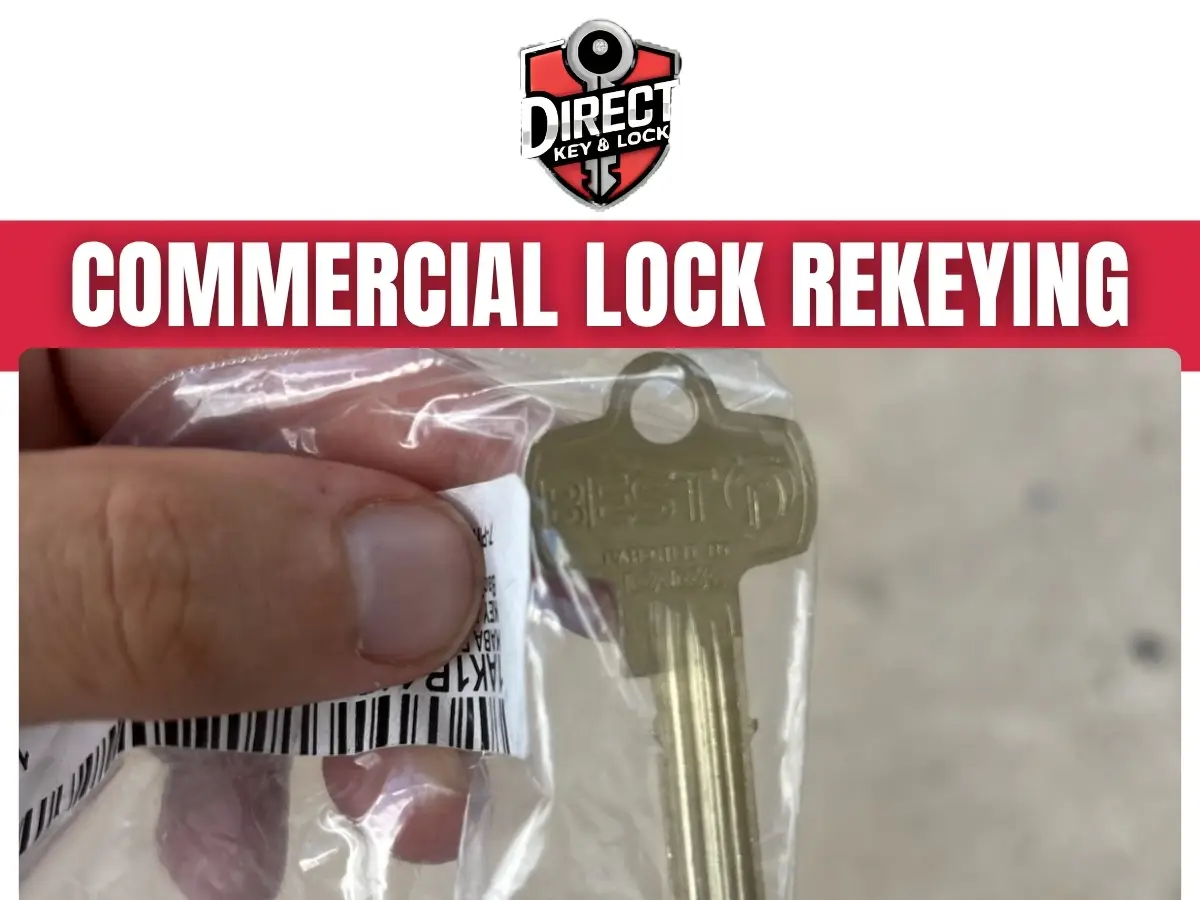
Commercial lock rekeying in Cypress changes a compatible lock’s internal pins so previous keys no longer operate it. Direct Key & Lock helps businesses in Cypress, TX, reset access after staff changes, missing keys, or a move. We review your locks, discuss access needs, and test the new keys.
Commercial lock rekeying changes which key operates an existing lock without necessarily replacing the whole lock assembly. On a compatible pin tumbler cylinder, a locksmith changes the pin arrangement to match a different key.
Your door hardware can often stay in place if it is in suitable condition. The change happens inside the cylinder, where the key interacts with the pins.
This service addresses key control. It does not fix every door problem, and it does not cancel an electronic credential or change an alarm code.
If your business uses both mechanical keys and electronic access, each needs a separate review. A missing key may call for rekeying, while a missing access card requires action through its own system.
Rekeying makes sense when you cannot confidently account for the keys that open your business. You do not need to wait for a break-in to review who has access.
Has an employee left without returning a key? Did a contractor keep a copy after a project ended? Even a returned key leaves a question if additional copies could have been made.
Rekeying affected locks creates a new starting point. Pair that change with a written key record so the same uncertainty does not return.
Rekeying is appropriate when the cylinder can accept a new pin arrangement and the hardware remains usable. Replacement may be necessary when the cylinder is damaged, incompatible, or unsuitable for the access plan.
A key that sticks does not automatically mean the lock needs replacement. A worn key, dirty cylinder, or door alignment problem can produce similar symptoms.
Direct Key & Lock checks the condition of the hardware before recommending a path. We separate key-control concerns from mechanical trouble so you can understand what needs attention.
A rekey also does not strengthen a weak frame or correct a door that will not latch. If several problems are present, we explain which concern each proposed step addresses.
A useful rekeying plan identifies which doors need new keys and who should use them. Changing every cylinder without reviewing access can leave unnecessary key duplication or overlooked entrances.
Think beyond the front door. A rear service entrance, stockroom, private office, or connecting door may give someone access to the same space.
A simple door list helps keep the work throughout your building focused. It also gives managers a practical reference when issuing keys after service.
Our commercial locksmith visit follows a clear sequence. We confirm permission, review the doors, assess the cylinders, perform the agreed work, and test operation.
The exact steps depend on the hardware and your property’s access arrangements.
Have an authorized contact available during the visit.
Quick decisions about a shared entrance or restricted room help prevent confusion while work is underway.
Several locks can sometimes operate with one key if their cylinders and keyways are compatible. A shared key can simplify daily opening and closing for staff who need the same access.
Compatibility matters more than appearance. Two cylinders may look nearly identical but accept different key blanks or use different internal systems.
For commercial lock rekeying in Cypress, we review those differences before discussing a common-key setup. We also ask whether combining access makes sense for your business.
A manager may need every exterior entrance, while a delivery contact may need only one door. Giving both people the same key would erase that boundary.
Convenience should support your access plan, not replace it. A smaller key ring is helpful, but not if it opens rooms the holder should not enter.
A master key system allows selected keys to open specific locks while another key opens a broader group. It requires compatible hardware and careful planning rather than simply making all locks use the same key.
Existing master key arrangements can affect a rekeying job. Changing a cylinder without understanding the system may disrupt access expected by an owner or property manager.
Tell us if your building has a master key or if you are unsure. Available key records and permission from the person controlling the system can help establish the next step.
Master keying also involves tradeoffs in mechanical security and administration. We discuss whether separate keys, matching keys, or a reviewed master key arrangement fits your actual needs.
A new commercial occupancy is a sensible time to establish a fresh key system. The keys handed over at move-in may not represent every copy still in circulation.
Previous staff, cleaning crews, contractors, or tenants may have received keys. Even a well-organized handover cannot always account for copies made earlier.
Before changing locks in a leased Cypress, Texas property, review the lease and speak with the property manager. Shared entrances and building master key systems may require coordination.
Plan the work around possession of the space and scheduled vendor visits. If several crews need access during setup, decide whether their access will continue after opening.
Your grand opening checklist has enough moving pieces. Mystery keys do not need a place on it.
A missing key calls for a review of every lock it can operate, not just the door used most often. The response depends on where the key was lost and what access it provides.
If the key was attached to business identification, tell us when you call. Also explain whether it opens exterior doors, private offices, or several locations.
A returned key is useful, but it does not prove no duplicate exists. When access must end with confidence, rekeying the affected cylinders addresses that mechanical key concern.
Commercial doors may use mortise cylinders, rim cylinders, keyed levers, or interchangeable cores. The hardware type affects how the cylinder is accessed and whether it can be rekeyed.
A storefront entrance and an office lever may need different tools and handling. Some restricted key systems also require authorization or access to specific components.
Photos can help with an initial discussion, though an on-site inspection may still be necessary. Send views of the lock, door edge, and interior hardware without exposing sensitive key records.
Let us know about exit devices or labeled fire doors. Rekeying should not interfere with required exit operation, and changes to related hardware need appropriate review.
We explain limitations when a cylinder cannot support the requested change. Guesswork is not a sound access policy.
The time needed depends on the number of cylinders, their condition, and the access plan. A few compatible locks generally involve less work than a property with mixed hardware and an existing master key system.
Missing working keys, damaged parts, and unclear permission can slow the process. Doors that drag or fail to latch may need attention beyond rekeying.
Tell us which entrances must remain available during business hours. We can discuss a work sequence that accounts for staff movement, deliveries, and customer traffic.
Do you have a narrow window between closing and the next shift? Mention it when contacting us so scheduling can be discussed before the visit.
Avoid promising your team an exact finish time before the locks are assessed. Clear planning is more useful than a rushed estimate.
Preparation helps us identify the correct locks and avoid changes that conflict with your building’s access rules. Gather working keys, permission information, and a list of doors before the appointment.
Do not force a troublesome key or take apart the cylinder before we arrive. A broken key or loose internal part can turn a straightforward assessment into a different lock repair.
Rekeying should change key access without compromising normal exit operation. Keep required exit routes usable while planning or completing lock work.
Do not add improvised locking hardware to solve a missing-key problem. Chains, padlocks, or blocked exit devices can create hazards and may conflict with applicable requirements.
If a key starts to twist, stop applying pressure. If the cylinder spins loosely or the door will not latch, report that condition separately from the rekeying request.
A door should not need lifting, slamming, or a shoulder push to lock. Those symptoms may point to hinge, closer, strike, or frame problems.
In Cypress, TX, exposed entrances can collect moisture and debris. Mention any changes after wet weather so the inspection includes the conditions you have observed.
New keys should operate the intended locks smoothly before they are distributed. Testing while the door is open first can help avoid an accidental lockout if something needs adjustment.
Direct Key & Lock checks operation as part of the commercial locksmith work. Your authorized contact should also understand the final key arrangement before the handoff is complete.
Set previous keys aside from the active key supply. A drawer full of unidentified keys is not a backup plan, even if every business seems to have one.
A written key log helps preserve the access control gained through rekeying. Record the key identifier, assigned person, issue date, and return date.
Use neutral identifiers rather than labeling keys with a business address or specific sensitive room. Keep the record accessible only to people responsible for managing access.
Choose one person or role to approve additional copies. Set a clear process for reporting lost keys and reviewing access when someone changes duties.
Rekeying does not prevent duplication of an ordinary key. If copying restrictions are a concern, ask about hardware compatibility and available key-control options rather than assuming every new key has that protection.
Review the log after staffing changes or tenant turnover. Small, routine checks are easier to manage than rebuilding the entire key history later.
Direct Key & Lock helps you plan a key change around your doors, staff, and property requirements. We focus on explaining what rekeying can address and what may need separate attention.
Whether you manage a shop, office, storage area, or leased commercial unit, start with the access problem you need to solve. Tell us about missing keys, recent occupancy changes, troublesome cylinders, and any existing master key arrangement.
For commercial lock rekeying in Cypress, call (346) 412-0490 or visit our contact page. Have your door count and authorization information ready so we can discuss a practical next step for your business.
Rekeying changes a lock’s internal configuration so it works with a different key rather than the previous one.
Direct Key & Lock provides commercial lock rekeying services for businesses.
Businesses may consider rekeying after staff changes, lost keys, or a change in occupancy.
Rekeying changes which key operates an existing lock, while replacement involves installing different lock hardware.
Rekeying suitability depends on the lock’s type, design, and condition.
Rekeying is worth considering when a business cannot account for keys held by previous occupants.
Some compatible locks can be configured to share a key, depending on the hardware and access needs.
Rekeying may support a master key arrangement when the locks are compatible with that setup.
Consider which doors need updated access, who should receive keys, and who is authorized to approve the work.
Rekeying changes key access but does not necessarily resolve hardware damage or wear. Repair or replacement may be more appropriate.