License Number: B31188601
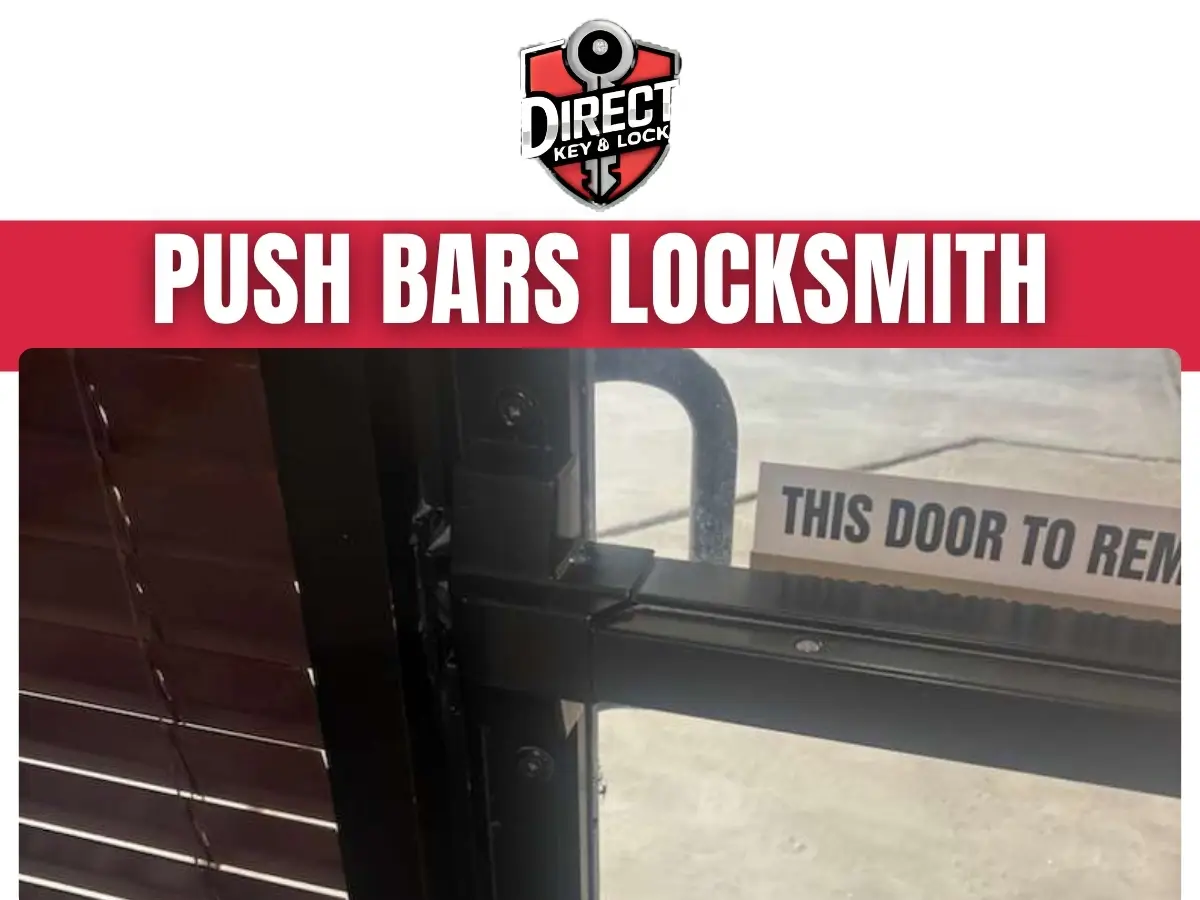
Push bar service for business exit doors in Cypress covers installing, repairing, and replacing door hardware that lets people exit by pressing a bar. Direct Key & Lock helps businesses in Cypress, TX address sticking bars, poor latching, and damaged exit devices while checking how the door, frame, and lock work together.
A push bar should not require a running start or a special technique. If employees need to push twice, pull the door first, or press a certain spot, the opening needs attention. Trouble at an exit can affect both daily use and building security.
We work with business owners and property managers to identify the problem before recommending a repair or replacement. Call (346) 412-0490 or visit our homepage to discuss your push bar service needs.
A push bar releases a door latch when someone presses the bar from inside. You may also hear this hardware called a panic bar, crash bar, or exit device.
The inside bar and outside lock serve different purposes. An exterior handle may stay locked against entry while the push bar still allows people to leave. A locked outside handle alone does not tell you whether the exit works correctly.
Hardware selection depends on the door, its use, and applicable building requirements. Not every commercial door needs the same device, and fire exit hardware has restrictions that ordinary panic hardware may not share.
Does your door have a single latch at the side or rods running toward the top and bottom? That detail helps identify the device. Photos of the full door and any visible product label can help us discuss the next step.
A push bar needs service when normal pressure does not release the latch consistently. Visible damage matters, but small changes in how a door feels can also point to a need for commercial lock repair.
Tell us whether the problem happens every time or only under certain conditions. A door that sticks during busy periods may have a different cause than one that fails after being locked overnight.
Avoid letting a small workaround become the normal routine. Employees should not need a training session just to open an exit door.
A working exit device can still struggle if the door, frame, or strike is out of position. Replacing the bar without checking the opening may leave the original problem unresolved.
Heavy use can loosen hinges and mounting screws. A door may sag, rub against the threshold, or place pressure on the latch. Weather seals can also create resistance if they bunch up or no longer fit correctly.
The strike is the frame-mounted piece that receives the latch. When these pieces do not meet correctly, the door may need extra force to open or may fail to latch after closing.
Our locksmith service for buildings looks at the full opening rather than assuming the push bar is the only issue. Useful checks include hinge movement, frame condition, latch contact, closing action, and rubbing points. For exterior doors in Cypress, we also consider moisture exposure and worn weather seals.
Push bar installation requires hardware that fits the opening and supports its intended exit function. Choosing a device by appearance alone can lead to poor fit or the wrong operation.
Before recommending installation, we review practical details about the door and how it is used.
A glass storefront door may need narrow-stile hardware, while a wider metal door may accept another configuration.
Existing holes also affect the work involved.
After fitting the device, the opening needs operational testing. Pressing the bar, releasing the latch, closing the door, and checking exterior access are separate checks. Each tells us something useful about how the installed hardware works.
Push bar repair focuses on restoring proper movement and latching without replacing usable hardware unnecessarily. The right repair depends on the device’s condition and the source of the problem.
Loose fasteners, worn internal pieces, damaged trim, or poor strike alignment may affect operation. Some problems can be corrected through adjustment or compatible replacement components. Others point to damage that makes full replacement the more practical choice.
Has someone already tightened screws or moved the strike? Let us know what changed and whether it helped. That history can shorten the path to finding the actual fault.
Our push bars locksmith service in Cypress includes checking how the reported problem affects the full door cycle. A bar that releases correctly is only part of the job. The door must also return and latch as its intended use requires.
Push bar replacement is worth considering when the existing device is badly worn, broken, or incompatible with the opening. Repeated trouble can also make replacement more practical than another limited repair.
A replacement should match the door’s needs, not simply cover the old screw holes. Device dimensions, latch location, outside trim, and mounting strength all affect the result. Any fire-rating restrictions must also guide hardware selection.
We explain what can remain and what may need to change. An outside handle might still be usable, but compatibility must be checked rather than assumed.
Door damage can complicate replacement. Torn mounting holes, a bent edge, or a weakened frame may require work beyond the bar itself. Identifying those conditions early helps you plan the work and understand why a direct swap may not solve the problem.
The exit device type determines which latch points and moving pieces need inspection. Two bars can look similar from the inside while operating very different mechanisms.
Rim exit devices latch into a strike mounted at the side of the frame or on a center post. They are common on commercial openings and offer a visible latch location for inspection.
Service may involve the latch, strike, internal mechanism, or mounting points. We also check whether pressure from the door is making the latch harder to release.
Vertical rod devices connect the push bar to latch points at the top, bottom, or both. These rods may be visible on the door face or concealed inside it.
Rod adjustment, floor debris, and door alignment can affect release. On paired doors, we check each leaf and how the opening behaves when both doors are used.
Mortise exit devices operate a lock body set within the door edge. Their service needs depend on the internal lock, bar mechanism, and outside trim.
A similar-looking replacement may not fit the existing preparation. Identifying the model and checking dimensions before exit device installation helps avoid unnecessary changes to the door.
Push bar service should include attention to connected door hardware because each piece affects daily operation. A properly working bar cannot compensate for a door that will not close correctly.
The door closer controls the closing motion. If the door slams, stalls, or stops short of latching, the closer or another source of resistance may need inspection. Increasing closing force without finding the cause can create a different problem.
Outside trim controls entry from the exterior. Depending on the hardware, it may include a keyed lever, pull handle, or another access function. We check that exterior operation does not interfere with inside exit use.
Tell us if the door has an alarm, keypad, card reader, or electrical connection. These features can change the service scope and may require coordination with another service provider.
A push bar service visit begins with the reported symptom and a check of the opening. We explain the findings before discussing the appropriate repair or replacement.
Some faults appear only during repeated use. Testing more than once helps catch sticking or inconsistent movement.
Before we leave, ask us to show you the normal operation. Knowing what correct movement feels like makes later changes easier to spot.
The time needed for push bar work depends on what is wrong and whether compatible components are available. A loose mounting point and a damaged concealed rod assembly involve different work.
Clear photos can help with initial planning, but they do not replace an inspection. Some faults remain hidden until covers are removed or the mechanism is tested.
If the door serves a busy customer entrance, mention your traffic pattern when calling. We can discuss access needs and how the work may affect use of that opening.
A push bar that will not release reliably needs prompt professional attention. If people cannot use the door normally, notify the person responsible for building safety and follow the site’s exit procedures.
Do not chain, tie, wedge, or add improvised locks to a required exit. Avoid removing rods or disabling latches to make a sticking door easier to use. Those changes can affect both exit operation and fire protection.
Some panic devices have an approved dogging feature that holds the latch retracted. That function is not appropriate for every opening. Fire exit hardware must not be mechanically dogged, and any hold-open arrangement needs review for that specific door.
Do not use the bar as a shelf, cart stop, or convenient place to hang supplies. It already has a full-time job. Keep the approach clear and report any new resistance, looseness, or latching failure.
You can prepare for service by collecting basic door information and providing clear access to the opening. Do not take the device apart before the visit.
Use this short preparation checklist.
Is the trouble limited to mornings, wet weather, or deliveries? Include that detail when you call. Patterns can help us distinguish a hardware fault from an alignment or use-related problem.
For leased business space, confirm who can approve changes to the door hardware.
Simple checks during normal use can reveal changes before the door becomes difficult to operate. Follow the device maker’s care instructions and your building’s inspection procedures.
Keep visible debris away from floor strikes and thresholds without taking hardware apart. Avoid spraying oil or cleaners into the mechanism without checking the maker’s instructions. The wrong product can collect dirt or affect internal operation.
Ask staff to report problems instead of inventing workarounds. A short note describing what happened is more useful than “the door is weird again,” though we understand the sentiment.
Push bar service works best when the hardware suits how people use the door. A customer entrance, employee exit, and delivery opening each face different demands.
In a Cypress retail space, frequent traffic can expose a weak closer or loose mounting point quickly. At a restaurant, boxes or carts may strike the bar during deliveries. Office exits may see less traffic, making an unnoticed fault easier to miss.
Exterior openings in Cypress, Texas also face rain, humidity, and dirt. These conditions make it useful to watch exposed fasteners, thresholds, seals, and metal surfaces for changes.
Direct Key & Lock focuses on the reported concern and the condition of the full opening. We explain the commercial locksmith options in plain language so you can make a practical decision about repair, replacement, or further door work.
For push bars locksmith service in Cypress, contact Direct Key & Lock to discuss your commercial exit door. We help with installation, repairs, and replacement based on the hardware and opening.
Tell us what the bar does when pressed, whether the door latches, and how outside entry works. Mention any alarm or access control connection so we can discuss the service needs.
Call (346) 412-0490 or contact us to arrange service in Cypress, TX. Let us help address the door problem before another push becomes another workaround.
A push bar is door hardware that allows people to open a door by pressing a horizontal bar from the inside.
Direct Key & Lock provides push bar locksmith services. Contact the company to discuss your door hardware needs.
Push bars are commonly found on exit doors in commercial buildings and public facilities.
Sticking, loose hardware, or difficulty opening or latching the door may indicate that it needs professional attention.
Repair may be an option, depending on the hardware’s condition and the nature of the problem.
Replacement may be considered when the hardware is damaged, worn, or no longer suitable for the door.
Installation depends on the door’s design, hardware compatibility, and applicable building requirements.
Some push bar hardware can work with access control systems, depending on the door setup and hardware type.
Routine maintenance can help address wear and operating issues. Maintenance needs vary by hardware and usage.
Consider the door type, how the building is used, and applicable exit requirements. A locksmith can help discuss suitable options.